Buying a high-value sex doll online involves more than choosing a body style, material, or face.
Before placing an order, it is worth verifying a few basic facts about the product, seller, inventory, shipping process, after-sales support, and payment method.
A careful pre-purchase check can help reduce common problems such as:
- receiving a different model than expected;
- misunderstanding where the product ships from;
- relying on generic marketing images;
- confusing factory stock with U.S. inventory;
- overlooking return or damage procedures;
- assuming a payment method automatically guarantees buyer protection.
The goal is not to make online purchasing complicated.
It is to make the transaction verifiable before payment.
Quick Answer
Before buying a sex doll online, verify the manufacturer, exact model number, product specifications, current stock location, shipping origin, packaging method, return and warranty terms, and available payment methods.
For higher-value or highly customized orders, it may also be useful to request current photos, video, or additional confirmation of the product configuration when available.
On This Page
- Verify the Manufacturer and Product Authenticity
- Confirm the Exact Model Number
- Understand Marketing Photos vs. Current Product Photos
- Verify Current Photos or Video When Available
- Check Seller Authorization Where Applicable
- Verify Material, Size, Weight and Options
- Confirm Where the Doll Is Actually in Stock
- Check Discreet Packaging and Shipping
- Review Returns, Damage and Warranty Policies
- Understand Payment Methods and Buyer Protection
- Red Flags to Watch For
- Pre-Purchase Checklist
- Conclusion
- Frequently Asked Questions
1. Verify the Manufacturer and Product Authenticity
When a product is sold under a known manufacturer or brand, start by checking whether the listing clearly identifies that manufacturer.
Useful information may include:
- manufacturer or brand name;
- model name;
- manufacturer model number;
- material;
- height;
- key configuration details.
A product name by itself may not be enough.
Different models can share similar:
- body proportions;
- facial designs;
- heights;
- product photography.
The first question should therefore be:
Can this product be clearly connected to the manufacturer and model being advertised?
For branded products, the seller should avoid presenting copies, lookalikes, or unrelated models as genuine manufacturer products.
2. Confirm the Exact Model Number
A manufacturer model number can be one of the strongest ways to identify a specific doll.
A single product may have several identifiers:
- manufacturer model number;
- product name;
- retailer SKU;
- body code;
- head code.
These should not automatically be treated as the same thing.
Before placing a high-value order, confirm that the manufacturer model corresponds to the product configuration you intend to purchase.
This becomes especially important when manufacturers offer:
- multiple heads for one body;
- TPE and silicone versions;
- different skin tones;
- alternative skeleton systems;
- different breast or body configurations;
- optional functional upgrades.
A model number helps reduce ambiguity that product names alone cannot always solve.
3. Understand Marketing Photos vs. Current Product Photos
Professional manufacturer images are useful for showing:
- design;
- body proportions;
- face;
- styling;
- product options.
However, they should not automatically be interpreted as photographs of the exact physical unit that will ship.
There is an important difference between:
Manufacturer marketing images
Images created to represent a model or configuration.
Representative product photos
Photos showing the general appearance of a product.
Current inventory photos
Photos of an item currently held in stock.
Pre-shipment photos or video
Images recorded during order preparation or final inspection.
Understanding this distinction reduces unrealistic expectations.
4. Verify Current Photos or Video When Available
For expensive products, some customers prefer additional visual confirmation before ordering or shipping.
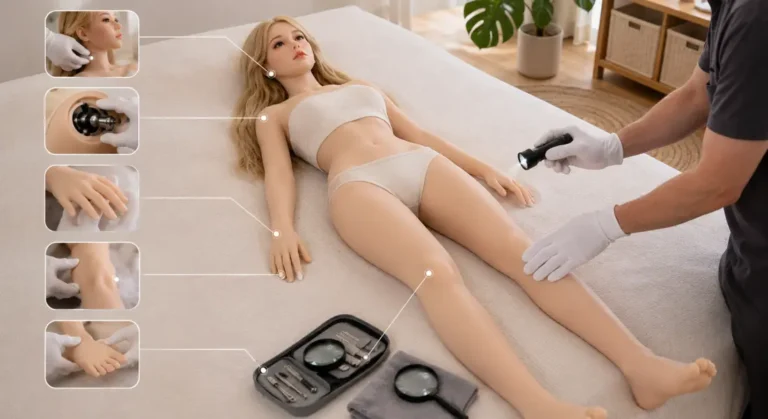
Where the seller’s warehouse or production workflow allows it, useful current images may include:
- face;
- body front;
- body back;
- skin surface;
- hands;
- feet;
- hair;
- distinctive model features.
A short video may provide additional confirmation.
However:
Not every warehouse or factory can provide photos of an individually assigned unit before an order is placed.
The seller should therefore explain clearly what kind of verification is actually available.
Photo Identification
When current photos are available, a simple identification note can make them easier to verify.
For example:
Model number + seller name + current date
This can help distinguish current images from old marketing assets.
It does not replace product documentation, but it provides another useful verification layer.
5. Check Seller Authorization Where Applicable
Some manufacturers formally authorize distributors or resellers.
If an authorization certificate or manufacturer relationship is presented, consider:
- which manufacturer issued it;
- which seller it identifies;
- whether it is current;
- what products or relationship it actually covers.
An authorization document for one manufacturer should not automatically be interpreted as authorization for every brand sold by the retailer.
Therefore:
Authorization claims should remain manufacturer-specific.
If no formal reseller program exists for a particular manufacturer, other forms of supply-chain documentation may be more relevant.
6. Verify Material, Size, Weight and Options
Product specifications should be checked against the exact model being ordered.
Important fields can include:
- material;
- height;
- weight;
- bust;
- waist;
- hips;
- skin tone;
- head model;
- skeleton type;
- standing option;
- oral or jaw features;
- other optional upgrades.
This is not merely technical detail.
Height and weight can affect:
- daily handling;
- storage;
- lifting;
- positioning;
- delivery requirements.
The most reliable principle is:
Product-specific manufacturer specifications should take priority over generic marketing descriptions.
Do not assume an attribute from a similar model applies to another product.
7. Confirm Where the Doll Is Actually in Stock
One of the most important questions before ordering is:
Where is the product physically located?
“Available” and “U.S. stock” are not the same thing.
Depending on the product, inventory may be located in:
- a U.S. warehouse;
- another regional warehouse;
- a partner warehouse;
- the manufacturer’s facility in China.
Some customized products may also need to be produced after the order is placed.
These situations can have very different delivery timelines.
Local Stock vs. Factory Stock
Local stock
The product is already stored in a regional warehouse.
This can usually reduce the time between payment confirmation and delivery.
Factory stock
The product is available from the manufacturer but still requires international transport.
Made-to-order
The product must first be produced or configured before shipping begins.
Therefore, never evaluate delivery time without first understanding:
stock status + shipping origin + production status
8. Check Discreet Packaging and Shipping
Privacy is a major concern for many buyers.
Before ordering, check whether the seller uses discreet outer packaging.
A discreet shipment generally means the exterior does not unnecessarily reveal:
- explicit adult-product imagery;
- graphic descriptions;
- obvious product branding.
However, discreet packaging should not be confused with removing legally or operationally required:
- carrier labels;
- shipping documentation;
- customs information where applicable.
A reliable seller should describe the actual packaging process rather than make vague privacy promises.
9. Review Returns, Damage and Warranty Policies
Before paying, review what happens if the order arrives:
- damaged;
- incomplete;
- with an incorrect model;
- missing an ordered option;
- with a potential manufacturing defect.
These situations can be different from an ordinary change-of-mind return.
This distinction is especially important for:
- customized products;
- hygiene-sensitive products;
- made-to-order products.
If the Product Arrives Damaged
If there is a problem, document it before attempting to repair or modify the product.
Useful evidence can include:
- photographs of the outer carton;
- photographs of internal packaging;
- shipping label;
- photographs of the affected area;
- short video showing the problem.
Then contact the seller promptly.
Making alterations before the issue has been reviewed can make it harder to determine what happened.
10. Understand Payment Methods and Buyer Protection
Available payment methods depend on the retailer, product, country, and checkout configuration.
They may include options such as:
- PayPal;
- direct bank transfer;
- other payment methods displayed at checkout.
The payment method itself should be distinguished from any separate buyer-protection program.
PayPal
If PayPal is available for an order, do not automatically assume that every transaction is covered by identical protection.
Eligibility and coverage depend on the applicable PayPal terms and transaction conditions.
Therefore, a seller should not simply promise:
“Full PayPal Buyer Protection guaranteed.”
The more accurate approach is to refer customers to the applicable payment-provider terms.
Direct Bank Transfer
If paying by direct bank transfer, verify:
- beneficiary name;
- bank details;
- order number;
- payment reference;
- official payment instructions.
For a high-value purchase, payment instructions should come through the seller’s official order or communication channel.
Be cautious if you are unexpectedly asked to transfer money to unrelated or unexplained personal accounts.
11. Red Flags to Watch For
No single issue automatically proves that a seller is unreliable.
However, several warning signs together justify additional verification.
Examples include:
- manufacturer information is missing;
- model numbers cannot be confirmed;
- specifications contradict each other;
- warehouse location is unclear;
- delivery claims appear unrealistic;
- no clear business contact information is available;
- return or damage policies are extremely vague;
- the seller cannot explain where product images came from;
- technical claims cannot be supported;
- payment instructions suddenly change to an unrelated account.
For a high-value purchase:
Verifiable information is more valuable than aggressive sales claims.
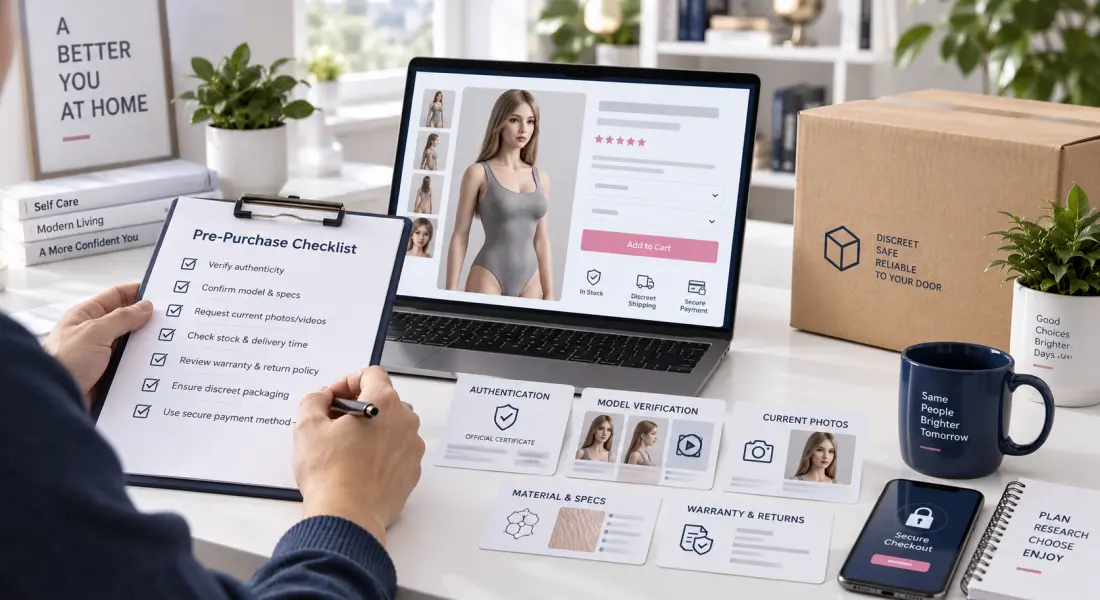
12. Pre-Purchase Checklist
Use this checklist before placing an order:
| Verification Point | Checked |
|---|---|
| Manufacturer identified | □ |
| Exact model number confirmed | □ |
| Material confirmed | □ |
| Dimensions reviewed | □ |
| Product weight reviewed | □ |
| Options/configuration confirmed | □ |
| Current photos or video reviewed if available | □ |
| Inventory status confirmed | □ |
| Shipping origin confirmed | □ |
| Delivery estimate understood | □ |
| Discreet packaging confirmed | □ |
| Damage procedure reviewed | □ |
| Warranty terms reviewed | □ |
| Return policy reviewed | □ |
| Payment method verified | □ |
| Payment instructions confirmed | □ |
For customized orders, it is also useful to keep a written record of the final configuration before production begins.
Conclusion
Buying a sex doll online safely is not only about finding the right appearance, material, or price.
A careful purchase should verify four layers:
Product Identity → Seller Transparency → Shipping & Inventory → Post-Purchase Protection
Before placing a high-value order, confirm:
- who manufactured the product;
- which exact model you are buying;
- what specifications apply;
- where the product is located;
- how it will be shipped;
- how privacy is handled;
- what happens if something goes wrong;
- how payment is processed.
The purpose of these checks is not to eliminate every possible risk.
It is to make the purchase clearer, documented, and easier to verify before payment.
Frequently Asked Questions
How can I tell if a sex doll is genuine?
Check the manufacturer name, model number, product specifications, and any available manufacturer or reseller documentation. The product should be traceable to the model being advertised rather than relying only on a marketing name.
Should I ask for current photos before buying a sex doll?
For a high-value product, current photos or video can provide additional verification when the warehouse or production process allows it. Ask whether the images represent current inventory, a production unit, or general manufacturer marketing material.
Why is the manufacturer model number important?
A model number helps distinguish similar bodies, heads, materials, and configurations. It provides a more precise identifier than a product name alone.
Should I confirm where a sex doll ships from?
Yes. A product may ship from U.S. stock, another regional warehouse, or directly from the manufacturer. Shipping origin can significantly affect availability and delivery time.
Is sex doll packaging discreet?
That depends on the seller’s actual shipping process. Buyers should confirm whether the order uses plain outer packaging without unnecessary adult-product imagery or explicit descriptions.
What should I do if my sex doll arrives damaged?
Photograph or record the product and packaging before making repairs or modifications, then contact the seller promptly and follow the applicable damage or warranty procedure.
Does paying with PayPal automatically guarantee buyer protection?
No. Any PayPal buyer-protection coverage depends on PayPal’s applicable eligibility requirements, transaction conditions, and current terms.
Is direct bank transfer safe for a high-value order?
Bank transfer can be a legitimate payment method, but buyers should verify the beneficiary, bank details, order reference, and official payment instructions before sending funds.