On this page
- Quick Answer
- Before You Start
- Why TPE Requires Maintenance Powder
- Understanding Why TPE Requires Maintenance Powder
- Choosing the Right Maintenance Powder
- When Should Maintenance Powder Be Applied
- Preparing Before Powder Application
- Step-by-Step Application
- Common Mistakes
- Frequently Asked Questions
Quick Answer
Maintenance powder is commonly applied to clean, completely dry TPE dolls to help reduce surface friction and maintain the material’s texture. Apply a light, even layer using a soft applicator or microfiber cloth, and avoid excessive amounts. Always follow the maintenance recommendations provided by the manufacturer of your specific doll.
Before You Start
| Item | Details |
|---|---|
| Reading Time | 7–9 minutes |
| Difficulty | Beginner |
| Applies To | TPE Dolls Only |
| Estimated Time | 5–10 minutes |
| Related Hub | Material Care |
Introduction
Thermoplastic elastomer (TPE) is a soft and flexible material commonly used in modern sex dolls. As part of routine maintenance, some manufacturers recommend applying maintenance powder after cleaning and drying to help maintain the surface condition and reduce friction during handling or storage.
This guide explains when maintenance powder should be used, how to apply it correctly, and situations where powder may not be necessary. Because maintenance recommendations vary between manufacturers, always refer to the care instructions provided with your specific doll.
Why Does a TPE Sex Doll Require Maintenance Powder?
Thermoplastic elastomer (TPE) has a naturally soft and flexible surface that differs from silicone. During normal use, cleaning, and storage, the surface may gradually lose its original dry texture. Some manufacturers recommend applying maintenance powder after the doll has been cleaned and completely dried to help maintain the surface condition.
Maintenance powder is not intended to repair damage or restore worn material. Its primary purpose is to reduce surface friction, improve handling, and help maintain a clean, dry feel during routine ownership.
Always follow the maintenance instructions provided by the manufacturer of your specific doll, as recommendations may differ between products.
Key Takeaway
Maintenance powder should be considered part of routine TPE surface care rather than a cosmetic treatment or repair product.
Understanding Why TPE Requires Maintenance Powder
Material Characteristics
| Characteristic | TPE | Silicone |
|---|---|---|
| Surface Texture | Soft | Smooth |
| Surface Friction | Higher | Lower |
| Routine Powder Application | Commonly Recommended | Depends on Manufacturer |
| Moisture Sensitivity | Higher | Lower |
| Typical Surface Finish | Matte | Satin |
TPE has a naturally soft and slightly porous surface that may develop increased surface friction after repeated cleaning or extended storage. Applying maintenance powder, when recommended by the manufacturer, can help restore a dry surface feel and reduce friction during routine handling.
Silicone materials have different surface characteristics and may not require routine powder application in the same way. Maintenance procedures should always follow the care instructions provided with the specific product.
Choosing the Right Maintenance Powder
Not every powder is suitable for use on TPE materials. Select products that are specifically recommended by the doll manufacturer or intended for routine TPE maintenance.
Recommended Characteristics
- Fine, unscented powder
- Designed for TPE maintenance
- Easy to apply evenly
- Leaves minimal visible residue
- Compatible with the manufacturer’s care recommendations
Avoid Using
- Powders containing oils or lotions
- Strongly scented cosmetic powders
- Industrial powders
- Abrasive cleaning powders
- Products not intended for TPE maintenance
Using unsuitable products may leave residue or produce results that differ from the manufacturer’s maintenance recommendations.
When Should Maintenance Powder Be Applied?
Maintenance powder is generally applied after the following steps have been completed:
- Routine cleaning
- Complete drying
- Final inspection of the surface
Applying powder to a damp surface may prevent even distribution and reduce its effectiveness.
For many owners, powder application becomes part of the regular maintenance routine after each thorough cleaning or before long-term storage. The exact frequency depends on the manufacturer’s instructions, environmental conditions, and how frequently the doll is used.
Preparing Before Powder Application
Before opening the powder container, confirm that the doll is ready for maintenance.
Preparation Checklist
- Surface is clean
- Surface is completely dry
- No visible moisture remains
- Maintenance area is clean
- Hands are clean or gloves are worn if appropriate
- Required tools are available
Recommended tools include:
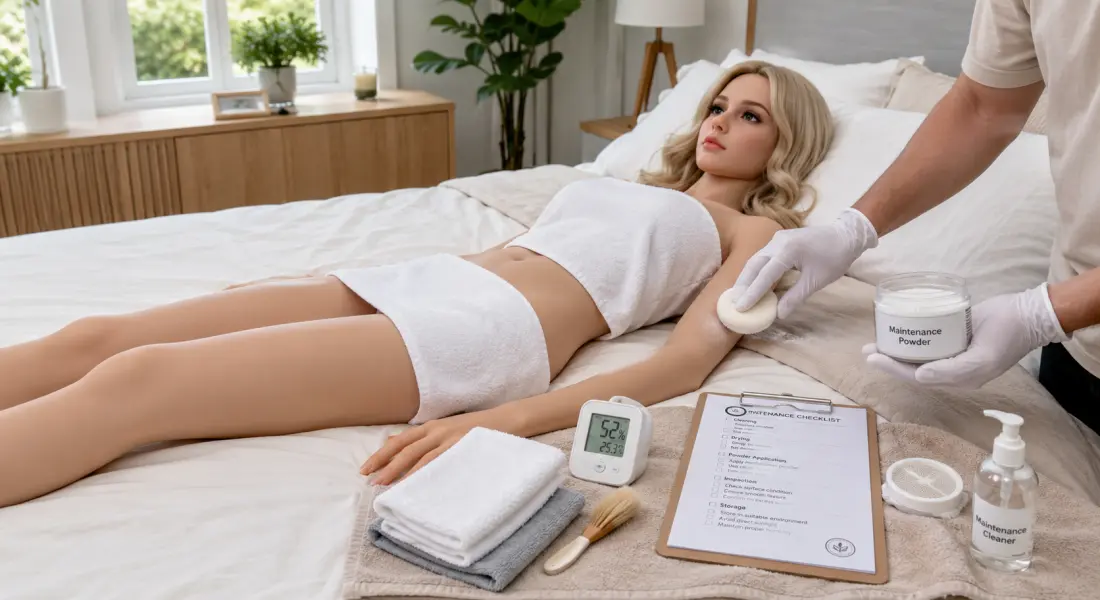
- Maintenance powder
- Soft microfiber cloth
- Cosmetic powder puff or applicator
- Clean maintenance towel
Proper preparation helps achieve a more even application.
How to Apply Maintenance Powder
Step 1 — Prepare a Small Amount
Place a small quantity of powder onto a clean applicator or soft microfiber cloth. Excessive powder is generally unnecessary.
Step 2 — Apply Evenly
Using gentle movements, distribute a thin layer across the surface.
Work gradually instead of applying a large amount to one area.
Step 3 — Cover High-Contact Areas
Pay particular attention to areas that experience more frequent contact, including:
- Arms
- Legs
- Torso
- Back
- Neck
Avoid concentrating excessive powder in skin folds or joints.
Step 4 — Remove Excess Powder
After application, lightly wipe the surface with a clean microfiber cloth if excess powder remains visible.
The objective is a clean, even finish rather than a thick coating.
How Much Powder Should You Use?
A light, even application is generally sufficient.
Applying additional powder does not necessarily improve maintenance and may leave unnecessary residue on the surface or surrounding clothing.
The goal is to maintain a smooth, dry surface rather than create a visible layer of powder.
Common Mistakes
Avoid These Common Mistakes
Applying Powder Before the Doll Is Completely Dry
Residual moisture may prevent the powder from distributing evenly.
Using Too Much Powder
Heavy application can create unnecessary residue and require additional cleaning.
Using Unsuitable Powder
Only use products that are compatible with the manufacturer’s maintenance recommendations.
Ignoring Regular Cleaning
Maintenance powder should not replace routine cleaning.
Powder is applied after cleaning has been completed.
Forgetting Storage Preparation
When preparing a doll for long-term storage, powder application should be considered alongside cleaning, drying, and proper storage positioning.
When Should You Reapply Maintenance Powder?
The frequency of application varies according to:
- Manufacturer recommendations
- Frequency of use
- Cleaning schedule
- Storage conditions
- Surface condition
Rather than following a fixed schedule, inspect the surface during routine maintenance and apply powder when appropriate according to the care instructions for your specific doll.
Material Care Checklist
Before Finishing Maintenance
Confirm the following:
- □ The doll has been cleaned.
- □ The surface is completely dry.
- □ The correct maintenance powder has been selected.
- □ Powder has been applied evenly.
- □ Excess powder has been removed.
- □ The surface has been inspected.
- □ The doll is ready for use or storage.
Conclusion
Applying maintenance powder is a routine step in caring for many TPE sex dolls after cleaning and drying. A light, even application may help maintain the surface condition and reduce friction during handling or storage. Powder should always be applied to a clean, completely dry surface and used according to the manufacturer’s maintenance recommendations.
Routine material care works best when combined with regular cleaning, proper drying, suitable storage conditions, and periodic inspections. Following a consistent maintenance routine helps support the long-term condition of the doll throughout ownership.
Frequently Asked Questions
Routine powder application depends on the manufacturer’s care instructions, how frequently the doll is used, and the condition of the TPE surface. Many owners apply a light layer after each thorough cleaning once the doll is completely dry, while others apply it only when the surface begins to feel less smooth or develops additional friction. Rather than following a fixed schedule, inspect the surface during routine maintenance and apply powder when appropriate.
No. The doll should be completely dry before maintenance powder is applied. Moisture can prevent the powder from spreading evenly and may leave visible residue on the surface. After drying, inspect the doll to confirm that no moisture remains before beginning powder application.
No. A thin, even layer is generally sufficient for routine maintenance. Applying excessive powder does not improve surface protection and may leave unnecessary residue on the doll or surrounding fabrics. If excess powder remains visible after application, gently remove it with a clean microfiber cloth.
Only use maintenance powders that are recommended by the manufacturer or specifically intended for TPE material care. Some general-purpose powders may contain added fragrances, oils, lotions, or other ingredients that are not suitable for routine maintenance. Always check the product instructions before use.
Silicone and TPE have different material characteristics and may require different maintenance routines. Some silicone dolls may not require routine powder application, while others may benefit from it depending on the manufacturer’s recommendations and the surface finish. Always follow the care instructions provided with your specific product.
If maintenance powder is recommended for your TPE doll, applying a light, even layer after cleaning and complete drying may help prepare the surface for storage. Before storing the doll, also confirm that the storage environment is clean, dry, well ventilated, and protected from direct sunlight and excessive heat. Proper storage conditions are as important as routine surface maintenance.
Related Guides
Continue learning with these related Care & Maintenance resources: