On this page
- Quick Answer
- Introduction
- Why Routine Inspection Matters
- What to Inspect
- Step-by-Step Inspection
- Common Warning Signs
- Inspection Checklist
- Frequently Asked Questions
Quick Answer
Routine inspection helps identify early signs of wear before they become more significant maintenance issues. Check the surface, joints, fingers, and other frequently handled areas for visible changes, unusual movement, or signs of damage. Performing a quick inspection after cleaning or before long-term storage can help support safe ownership and routine maintenance.
Introduction
Routine inspection is an important part of responsible sex doll ownership. While cleaning and storage help maintain the condition of the doll, regular inspections allow owners to identify small issues before they become more difficult to address.
Why Routine Inspection Matters
Routine inspection is a preventive maintenance practice rather than a repair procedure. By checking the doll regularly, owners may notice minor changes that are easier to address before they develop into larger maintenance concerns.
Regular inspections may help you:
- Detect small surface changes early.
- Identify unusual joint movement.
- Check for loose or damaged fingers.
- Monitor areas exposed to frequent handling.
- Confirm the doll is ready for continued use or long-term storage.
Rather than waiting until visible damage appears, incorporating inspections into your maintenance routine helps establish a consistent ownership workflow.
What Should You Inspect?
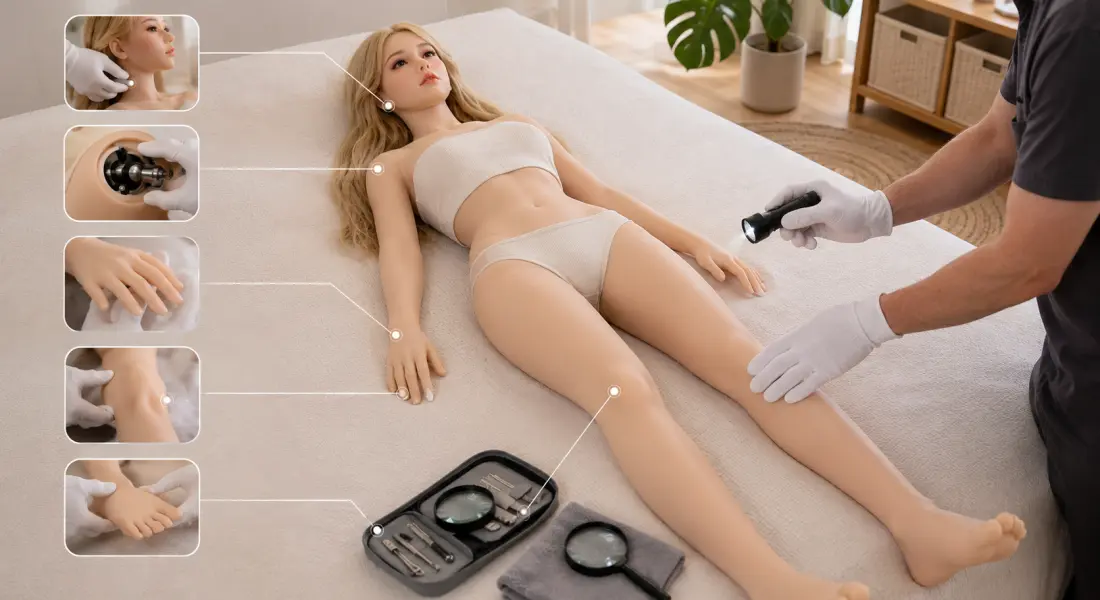
A complete inspection covers more than just the visible surface. During routine maintenance, examine the doll systematically from head to toe so that no area is overlooked.
The following inspection points are recommended for both TPE and silicone dolls:
- Surface condition
- Joints and body movement
- Hands and fingers
- Head and neck
- Feet and standing structure (if applicable)
- High-contact areas
- Overall cleanliness and storage condition
Performing inspections in the same order each time makes it easier to notice gradual changes over time.
Surface Inspection
The surface is the first area that should be examined during every routine inspection.
Begin by placing the doll in a clean, well-lit environment. Slowly inspect the entire body for visible changes while gently feeling the surface with clean hands.
Look for:
- Small cuts or scratches
- Surface abrasions
- Areas of discoloration
- Permanent stains
- Surface deformation
- Unusual stickiness or texture changes
- Areas that appear unusually dry
Pay extra attention to areas that experience frequent contact, such as the shoulders, hips, knees, elbows, hands, feet, and neck.
If any changes are found, record their location and monitor them during future inspections.
Joint Inspection
After checking the surface, inspect the internal skeleton by gently moving each joint through its normal range of motion.
Movement should feel smooth and controlled without excessive resistance or looseness.
Inspect the following joints:
- Neck
- Shoulders
- Elbows
- Wrists
- Hips
- Knees
- Ankles
During inspection, look for:
- Unusual stiffness
- Excessive looseness
- Clicking or grinding sensations
- Limited range of motion
- Movement that feels different from previous inspections
Do not force any joint beyond its natural range of motion. If unusual resistance is noticed, stop moving the joint and inspect the surrounding area before continuing.
Finger and Hand Inspection
Hands are among the most frequently handled parts of a doll and should be inspected regularly.
Carefully examine:
- Finger alignment
- Finger movement
- Fingertips
- Palm surface
- Wrist movement
If your doll includes an articulated finger skeleton, move each finger gently and avoid bending individual fingers sharply.
Inspect for:
- Exposed wire
- Loose finger movement
- Surface damage around the fingers
- Changes in hand position that differ from normal alignment
Early detection can help prevent minor issues from becoming larger repairs.
Head and Neck Inspection
The head and neck experience repeated movement during routine handling and pose adjustment.
Check:
- Neck rotation
- Head stability
- Connection between the head and neck
- Surface condition around the neck opening
- Hairline area (if applicable)
The head should remain securely attached and move naturally according to the manufacturer’s design.
Avoid twisting or rotating the head with excessive force.
Standing Feet Inspection (If Applicable)
For dolls designed with standing feet, inspect the feet before and after each standing session.
Check:
- Sole condition
- Protective inserts (if used)
- Surface wear
- Heel area
- Toe support
- Overall balance while standing
Avoid placing excessive body weight on unsupported standing feet for extended periods.
If unusual wear or instability is observed, discontinue standing poses until the issue has been evaluated.
High-Contact Areas
Certain areas naturally experience more frequent contact during routine ownership and therefore deserve additional attention during inspections.
These areas include:
- Underarms
- Inner thighs
- Hip joints
- Knees
- Elbows
- Neck folds
- Hands
- Feet
Inspect these locations for changes in surface condition, discoloration, increased friction, or signs of repeated pressure.
Routine observation of these areas makes it easier to identify gradual wear before more significant maintenance is required.
Step-by-Step Inspection Procedure
Step 1 — Prepare a Clean Inspection Area
Place the doll in a bright, clean environment with sufficient lighting.
Step 2 — Inspect the Surface
Examine the body from head to toe, checking for visible changes in texture, color, or condition.
Step 3 — Check Joint Movement
Move each joint gently through its normal range of motion without forcing any movement.
Step 4 — Inspect Hands, Neck, and Feet
Carefully examine areas that experience frequent movement or weight-bearing.
Step 5 — Record Your Findings
If any unusual changes are observed, record the location, appearance, and inspection date. Comparing notes from previous inspections makes it easier to determine whether a condition is stable or changing over time.
Common Warning Signs
During routine inspections, pay attention to changes that differ from the doll’s normal condition.
Common warning signs include:
- New surface scratches or cuts
- Areas of discoloration
- Persistent stains
- Increased surface stickiness
- Visible deformation
- Loose joints
- Reduced joint movement
- Exposed finger wire
- Unstable standing posture
- Unusual noises during joint movement
Finding one of these signs does not necessarily indicate serious damage. However, documenting the condition and monitoring it during future inspections can help determine whether additional maintenance or repair may be appropriate.
Inspection Checklist
Use the following checklist during every routine inspection to help ensure that no important areas are overlooked.
| Inspection Item | Check |
|---|---|
| Surface is clean and free of visible damage | ☐ |
| No unusual discoloration or permanent stains | ☐ |
| No excessive stickiness or texture changes | ☐ |
| Joints move smoothly without excessive resistance | ☐ |
| No loose or unstable joints | ☐ |
| Fingers are properly aligned | ☐ |
| No exposed finger wire | ☐ |
| Head and neck connection feels secure | ☐ |
| Standing feet (if applicable) show no unusual wear | ☐ |
| High-contact areas show no signs of excessive friction | ☐ |
| No unusual odors or moisture detected | ☐ |
| Inspection date recorded | ☐ |
Conclusion
Routine inspections are one of the simplest and most effective ways to support long-term ownership. By examining the surface, joints, fingers, and other frequently handled areas on a regular basis, small changes can often be identified before they require more extensive maintenance.
A consistent inspection routine also helps you become familiar with your doll’s normal condition, making it easier to recognize unusual wear or movement over time.
As part of a complete maintenance workflow, inspections should be performed after cleaning, before long-term storage, and whenever any unusual condition is noticed during routine handling.
Frequently Asked Questions
A quick visual inspection is recommended after each cleaning or before long-term storage. A more detailed inspection can be performed periodically depending on how frequently the doll is used and handled.
High-contact areas such as the neck, shoulders, elbows, hips, knees, hands, and feet often experience more handling than other parts of the body. These areas should receive additional attention during routine inspections.
Avoid continued use of the affected area until it has been evaluated. Small surface damage may become larger if subjected to repeated stress. Refer to the appropriate repair guide or follow the manufacturer’s maintenance recommendations.
Compare the joint with its normal range of movement. If it moves more freely than usual, feels unstable, or no longer supports posing as expected, it may require further inspection or maintenance.
Minor changes in surface feel may occur during normal ownership depending on the material, handling frequency, and maintenance routine. Regular cleaning, appropriate maintenance, and proper storage help maintain consistent surface condition.
Yes. Recording inspection dates and any observed changes makes it easier to monitor gradual wear over time and helps determine whether a condition is improving, remaining stable, or requiring further attention.