Article Navigation
- Quick Answer
- Why Lubricant Matters
- What Happens If You Don’t Use Enough Lubricant?
- What Lubricant Is Safe for a Sex Doll?
- Water-Based Lubricant
- Silicone-Based Lubricant
- Oil-Based Lubricant
- How to Use Sex Doll Lubricant Properly
- Our Recommendation for Everyday Use
- Cleaning After Lubricant Use
- Common Lubrication Mistakes
- How to Choose the Right Sex Doll Lubricant
- FAQ
Quick Answer
A water-based lubricant is generally the safest starting choice for sex doll use because it is easy to clean and does not carry the same stated silicone-material compatibility concern as silicone-based lubricant.
Manufacturer guidance provided to XLifeDoll specifically warns that silicone-based lubricants may damage silicone products. Oil-based lubricants are long-lasting but harder to clean, while the supplied manufacturer information does not establish their compatibility with every TPE, silicone, or internal system.
Always follow the lubricant requirements specified for your particular doll or functional system.
Why Lubricant Matters
Lubricant is not simply an optional accessory. It plays an important role in reducing friction between contacting surfaces during use.
Without sufficient lubrication, friction increases. This can make movement less smooth and place additional mechanical stress on soft materials.
The basic relationship is straightforward:
Adequate lubrication → lower friction → less unnecessary material stress
For a TPE or silicone doll, this is particularly important around areas where soft material may experience repeated friction, stretching, or compression.
Correct lubrication therefore contributes to both user comfort and material protection.
What Happens If You Don’t Use Enough Lubricant?
Insufficient lubrication increases resistance between contacting surfaces.
This may result in:
- increased friction;
- less comfortable or less smooth use;
- greater localized stress on soft material;
- unnecessary stretching during movement;
- potentially greater risk of premature material damage over repeated use.
This does not mean that a doll will automatically tear whenever lubricant is not used.
The more technically accurate principle is:
Higher friction increases mechanical stress. Repeated excessive friction may therefore increase the risk of material wear or damage.
For this reason, lubrication should be treated as part of correct product handling rather than only as a comfort preference.
What Lubricant Is Safe for a Sex Doll?
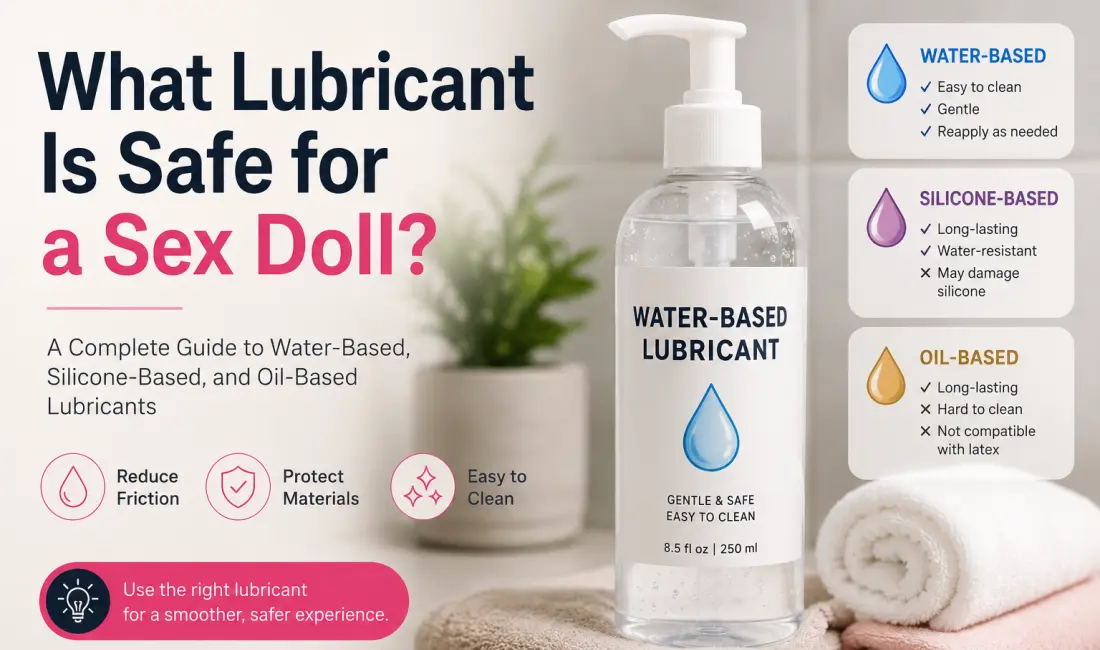
Lubricants are commonly divided into three major categories:
| Lubricant Type | Main Characteristics | Material Consideration | XLifeDoll Guidance |
|---|---|---|---|
| Water-Based | Gentle, easy to clean, shorter-lasting | Manufacturer information identifies good compatibility with latex products | Preferred starting option where compatible |
| Silicone-Based | Long-lasting, water-resistant | Manufacturer warns it may damage silicone products | Avoid on silicone dolls unless explicitly approved |
| Oil-Based | Long-lasting, difficult to clean | Manufacturer states it can degrade latex; universal doll-material compatibility has not been established | Use only when compatibility is confirmed |
The important principle is not simply to choose the lubricant with the longest-lasting effect.
The lubricant must be compatible with the specific material and product system being used.
Water-Based Lubricant
According to the manufacturer information supplied to XLifeDoll, water-based lubricant is easy to clean, relatively gentle, and compatible with latex products and toys.
Its principal disadvantage is shorter lubrication duration compared with silicone- or oil-based formulations.
That means additional lubricant may occasionally need to be applied when friction begins to increase.
For doll ownership, its easier cleanup is an important practical advantage because lubricant residue should not remain unnecessarily on or inside the product.
Advantages
- easy to clean;
- gentle formulation;
- straightforward maintenance;
- can be reapplied when lubrication decreases.
Limitation
Water-based lubricant may dry or lose effectiveness more quickly and therefore may require reapplication.
Silicone-Based Lubricant
Silicone-based lubricant primarily uses silicone compounds and provides significantly longer-lasting lubrication.
It is also water-resistant, which makes this type of lubricant useful in applications where water-based products would dissipate quickly.
However, there is an important compatibility issue for silicone dolls.
The manufacturer information supplied to XLifeDoll states that:
Silicone-based lubricant may damage silicone-material adult products.
For this reason, a silicone-based lubricant should not be assumed to be safe simply because it provides better or longer-lasting lubrication.
XLifeDoll Recommendation
If you own a silicone doll, do not use a silicone-based lubricant unless the manufacturer has explicitly confirmed compatibility with that particular material and product system.
The same principle should be followed for products containing specialized internal functional components.
Oil-Based Lubricant
Oil-based lubricants may contain mineral or vegetable oils and generally provide long-lasting lubrication.
Their principal disadvantages are more difficult cleaning and material compatibility concerns.
The manufacturer information provided to XLifeDoll specifically states that oil-based lubricants can degrade latex and must not be used with latex condoms.
However, this evidence alone does not establish that every oil-based lubricant will damage every TPE or silicone doll.
Therefore, XLifeDoll does not recommend assuming universal compatibility.
Practical rule
If the manufacturer has not confirmed that an oil-based lubricant is compatible with your specific doll material and internal system, choose a verified compatible alternative instead.
How to Use Sex Doll Lubricant Properly
Apply a compatible lubricant before use to reduce friction between contacting surfaces. Distribute it evenly over the relevant area rather than relying on a small amount in one location.
Pay attention to resistance during use. If movement begins to feel noticeably less smooth or friction increases, stop and apply additional lubricant before continuing.
Do not treat resistance as something that should simply be overcome with additional force. Higher friction means greater mechanical stress is being placed on the contacting material.
There is no universal amount of lubricant suitable for every doll. Use enough to maintain smooth lubrication without unnecessary excess, and follow any model-specific instructions supplied by the manufacturer.
Our Recommendation for Everyday Use
For routine use, XLifeDoll recommends choosing a water-based lubricant that is confirmed to be compatible with your doll. It is easy to apply, easy to clean, and can be reapplied whenever lubrication begins to decrease.
Apply enough lubricant to the contact area to reduce excessive friction before use. If you notice increasing resistance, stop and apply more rather than continuing under high friction.
XLifeDoll offers a water-based lubricant designed as a practical option for doll owners. If you are looking for an easy-to-clean lubricant for regular care and use, you can view the product specifications and usage information on our [Water-Based Lubricant] product page.
After use, remove lubricant residue and follow the appropriate cleaning and drying procedure before storage.
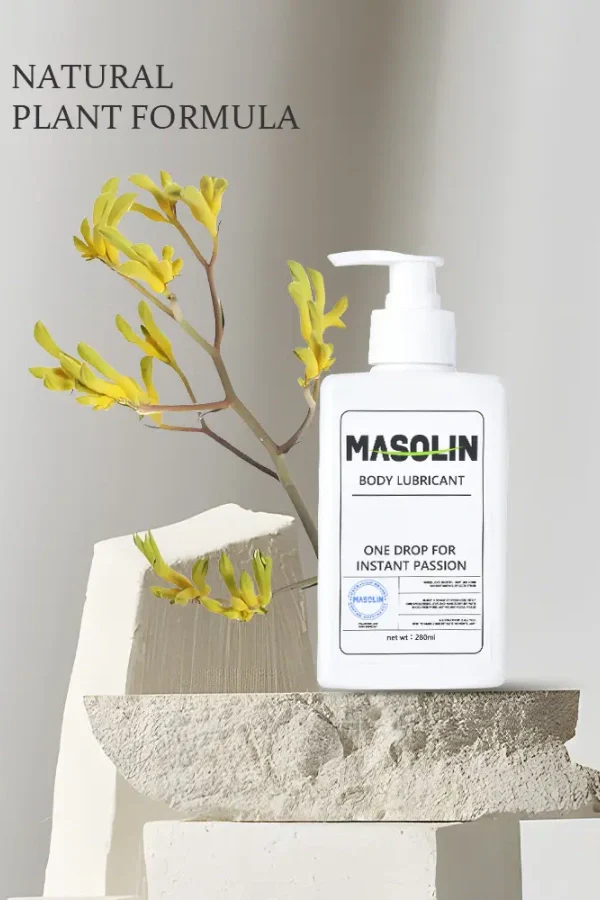
Premium Water-Based Personal Lubricant | Toy Safe
Ensure hygiene and longevity with our Electric Sex Doll Orifice Cleaning Kit. Features power sterilizer and douching system. Essential for all sex doll owners.
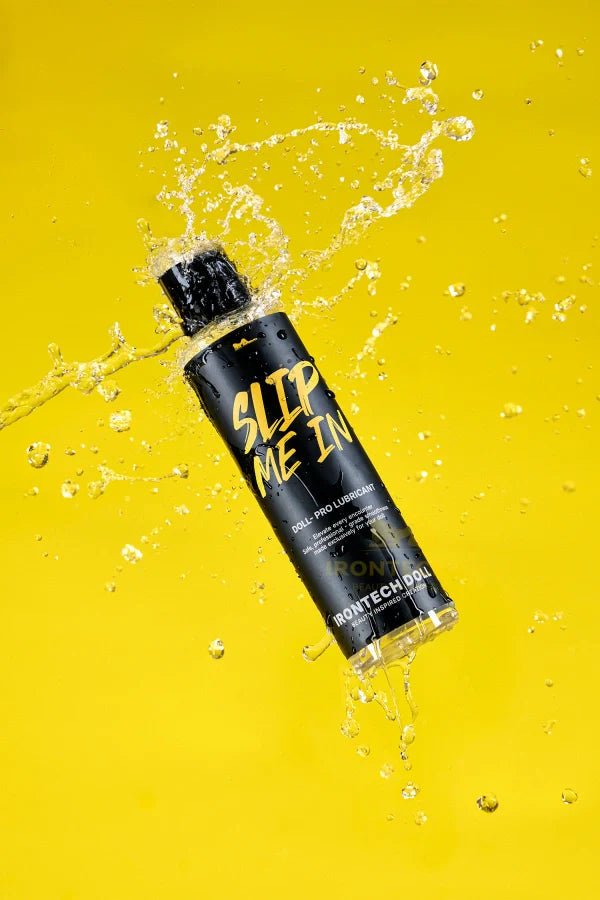
Water-Based Doll Lube for TPE Silicone Longevity
Experience seamless intimacy with our 200ml Doll Water-Based Lube. TPE & Silicone safe. Hypoallergenic, non-sticky, and ultra-realistic.
Cleaning After Lubricant Use
Lubrication and cleaning should be considered parts of the same maintenance cycle.
After use:
- remove lubricant residue according to the material-specific cleaning instructions;
- clean applicable internal and external areas;
- rinse away remaining cleaner or residue where appropriate;
- dry the cleaned areas thoroughly;
- do not store the doll while moisture remains trapped internally.
This is especially relevant when lubricant has been applied to areas that are difficult to ventilate.
For the complete procedure, see the XLifeDoll Sex Doll Cleaning Guide and Sex Doll Drying Guide rather than substituting lubrication advice for a proper cleaning routine.
Common Lubrication Mistakes
Using Too Little Lubricant
Continuing when friction has clearly increased creates unnecessary resistance and material stress.
Assuming All Lubricants Are Interchangeable
Water-, silicone-, and oil-based formulations have different properties and material compatibility considerations.
Using Silicone-Based Lubricant on Silicone Without Verification
Manufacturer guidance supplied to XLifeDoll specifically identifies a potential compatibility problem between silicone-based lubricant and silicone products.
Assuming “Long-Lasting” Means “Better”
Lubrication duration is only one performance characteristic.
Material compatibility is more important than lubrication duration.
Ignoring Cleaning Afterward
A suitable lubricant does not eliminate the need for correct cleaning and drying.
How to Choose the Right Sex Doll Lubricant
When selecting a lubricant, use the following decision order:
1. Identify the doll material.
Determine whether the product is TPE, silicone, or another specified material.
2. Check manufacturer compatibility guidance.
Do not make assumptions based only on the lubricant label.
3. Consider internal systems.
Products with specialized internal structures or functional systems may have additional compatibility requirements.
4. Prefer easier maintenance where performance is adequate.
A lubricant that can be cleaned effectively reduces unnecessary maintenance complexity.
5. Stop if you notice abnormal material changes.
Unexpected tackiness, swelling, discoloration, surface changes, or other abnormal reactions should not be ignored.
Material compatibility always takes priority over convenience.
FAQ
What is the safest lubricant for a sex doll?
A water-based lubricant is generally the preferred starting option where it is confirmed compatible with the specific doll. It is easy to clean and avoids the silicone-on-silicone compatibility concern identified in the manufacturer guidance supplied to XLifeDoll.
Can I use silicone lubricant on a silicone sex doll?
It should not be assumed to be safe. Manufacturer information supplied to XLifeDoll states that silicone-based lubricant may damage silicone-material products. Use it only when compatibility with the specific product has been explicitly confirmed.
Can I use oil-based lubricant on a sex doll?
Only when compatibility with the specific product has been confirmed. The available manufacturer information establishes that oil-based lubricant can degrade latex, but it does not establish universal compatibility or incompatibility across every TPE and silicone formulation.
Can too little lubricant damage a sex doll?
Insufficient lubrication increases friction and mechanical stress. Repeated excessive friction may therefore increase material wear or the risk of damage. Adequate lubrication helps reduce unnecessary friction.
Do I need to clean the doll after using lubricant?
Yes. Lubricant residue should be removed as part of the normal cleaning process, followed by thorough drying according to the product’s material-specific maintenance instructions.
Conclusion
Choosing the correct sex doll lubricant is fundamentally a material-compatibility decision.
Water-based lubricant offers easier cleaning and is generally the preferred starting option where product compatibility has been established. Silicone-based lubricant lasts longer but should not automatically be used with silicone dolls, because manufacturer guidance identifies a potential material compatibility risk. Oil-based products also require specific compatibility verification.
Most importantly, do not continue using a doll under excessive friction. Correct lubrication reduces resistance and unnecessary mechanical stress, while proper cleaning and drying complete the maintenance cycle.
For long-term care, lubricant selection should therefore be considered alongside cleaning, drying, material care, inspection, and correct handling.