On This Page
- Quick Answer
- Why Sex Dolls Become Stained
- Common Sources of Stains
- How to Prevent Sex Doll Stains
- Common Mistakes to Avoid
- Manufacturer Recommendations
- What If Your Doll Is Already Stained?
- Maintenance Checklist
- Frequently Asked Questions
Quick Answer
The best way to prevent sex doll stains is to avoid prolonged contact with dark or untested fabrics, clean the doll regularly, dry it completely before storage, apply maintenance powder, keep it away from direct sunlight, and store it in a cool, dry environment. These practices are consistently recommended across multiple manufacturer maintenance guides.
Why Do Sex Dolls Become Stained?
Stains usually occur because pigments migrate into porous TPE over time.
Unlike silicone, TPE can gradually absorb dyes from fabrics, especially when heat, pressure, moisture, or prolonged contact are involved.
The most common causes include:
- Dark denim
- Black underwear
- Dyed stockings
- Artificial leather
- Colored bedding
- Cosmetics
- Oils and residue
- UV exposure that accelerates material aging
Most staining develops slowly rather than instantly, making early prevention much more effective than later restoration.
Common Sources of Stains
The following materials present the highest risk of color transfer:
| Risk Level | Material |
|---|---|
| High | Dark denim |
| High | Black cotton clothing |
| High | Leather and faux leather |
| Medium | Colored lingerie |
| Medium | Printed fabrics |
| Low | Light-colored cotton fabrics |
When using new clothing, remember that excess dye released during manufacturing is often responsible for staining rather than the fabric itself.
How to Prevent Sex Doll Stains
1. Wash New Clothing Before Use
Always wash newly purchased clothing before dressing your doll.
This removes excess surface dye that could otherwise migrate into TPE during extended contact.
Manufacturer manuals consistently warn that dark fabrics can permanently discolor TPE if precautions are not taken.
2. Avoid Leaving Dark Clothing on the Doll
Dark clothing should only be worn temporarily.
Remove items such as:
- Denim jeans
- Black stockings
- Leather clothing
- Dark lingerie
after photography, display, or use.
Leaving heavily dyed fabrics on the doll for days or weeks greatly increases the chance of permanent color transfer.
3. Keep the Skin Clean
Dust, body oils, lubricants, and cosmetic residue can trap pigments against the skin.
Routine cleaning removes these contaminants before they penetrate the material.
Following a regular cleaning schedule also helps identify early discoloration while it is easier to address.
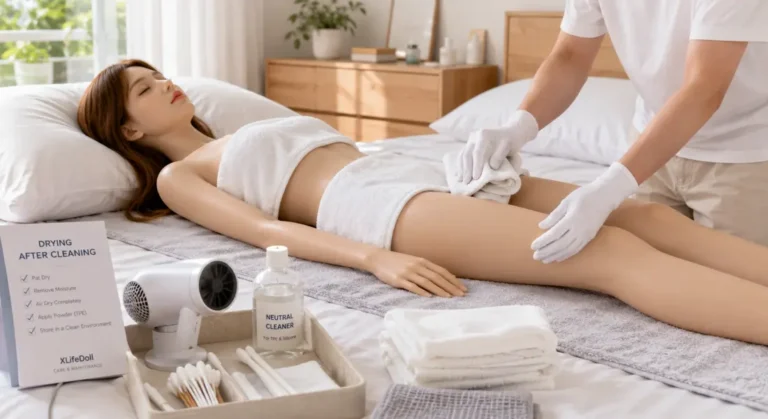
4. Dry Thoroughly Before Storage
Never store a damp doll.
After cleaning:
- Dry the surface with a soft towel.
- Allow hidden moisture to evaporate naturally.
- Ensure internal passages are dry.
- Apply maintenance powder only after the doll is completely dry.
Proper drying reduces moisture-related material degradation and supports long-term skin protection.
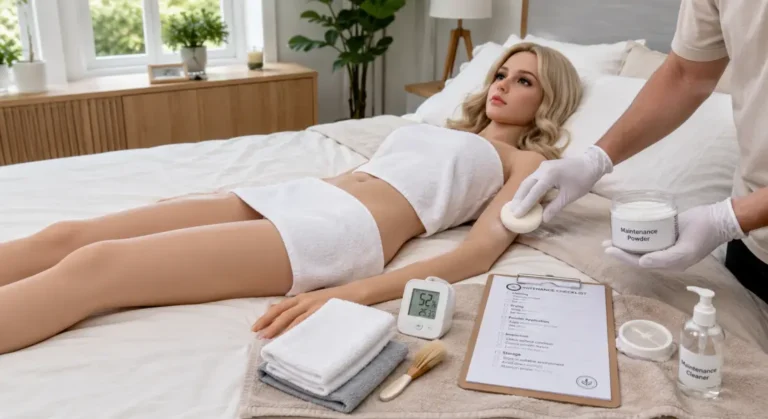
5. Apply Maintenance Powder
Maintenance powder helps maintain the surface condition of TPE by:
- Reducing stickiness
- Minimizing friction
- Limiting dust accumulation
- Keeping the skin smooth
Manufacturers generally recommend applying powder only after the doll has fully dried.
6. Store the Doll Properly
Correct storage protects both the material and appearance.
Recommended practices include:
- Store in a cool, dry place.
- Keep away from direct sunlight.
- Avoid prolonged pressure on one area.
- Use a clean, soft storage surface.
- Rotate the doll’s position during long-term storage.
These recommendations reduce the likelihood of staining, pressure marks, and premature material aging.
7. Test Unknown Fabrics First
If you are unsure whether a fabric is colorfast:
- Wash the garment.
- Place it against a hidden area of the doll for several hours.
- Check for any dye transfer.
- Use the clothing only if no discoloration appears.
This simple precaution can prevent irreversible stains.
Common Mistakes to Avoid
Avoid these common practices that increase the risk of staining:
- Leaving dark clothing on the doll for extended periods.
- Dressing the doll in unwashed new garments.
- Storing the doll while damp.
- Exposing the doll to direct sunlight for long periods.
- Using harsh household cleaners or solvents on TPE.
- Ignoring early signs of color transfer.
Manufacturer Consensus
Although maintenance manuals differ in wording, several recommendations appear consistently across official guidance from multiple manufacturers:
- Avoid prolonged contact with dark fabrics.
- Clean the doll regularly.
- Dry completely before storage.
- Store in a cool, dry environment.
- Protect TPE from direct sunlight.
- Apply maintenance powder after drying.
These recurring recommendations form the basis of the preventive care advice presented in this article.
What If Your Doll Is Already Stained?
If discoloration has already appeared:
- Stop using the staining fabric immediately.
- Clean the affected area using mild soap and water.
- Follow the stain-removal method recommended by your manufacturer.
- Avoid bleach, acetone, alcohol, or abrasive cleaners, which can permanently damage TPE.
Some manufacturers also recommend specialized stain-removal products formulated specifically for TPE materials.
Maintenance Checklist
Before dressing your doll:
- □ Wash new clothing.
- □ Choose light-colored fabrics whenever possible.
- □ Check that the doll is clean.
- □ Ensure the skin is completely dry.
- □ Apply maintenance powder if needed.
During storage:
- □ Remove dark clothing.
- □ Store in a cool, dry place.
- □ Avoid direct sunlight.
- □ Rotate the storage position regularly.
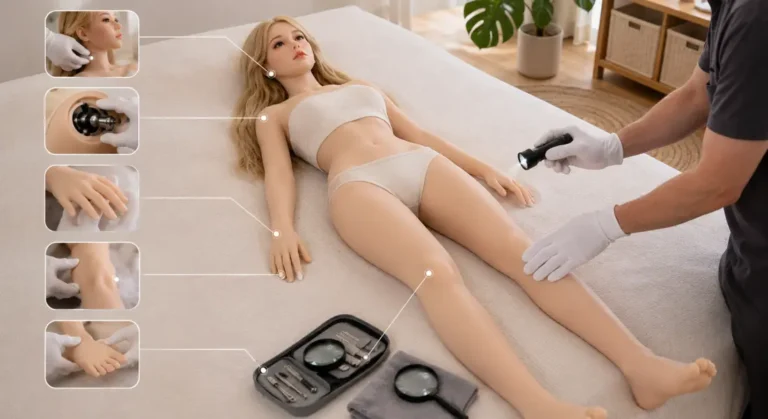
- □ Inspect the skin periodically for early signs of discoloration.
Frequently Asked Questions
Yes. Dark fabrics such as denim, black cotton, and leather can transfer dye into porous TPE, especially after prolonged contact.
Yes. Washing removes excess dye from new garments and reduces the risk of color transfer.
Maintenance powder helps reduce surface tackiness and friction, but it cannot completely prevent staining caused by heavily dyed fabrics.
Yes. Long-term UV exposure accelerates material aging and may contribute to discoloration over time.
Absolutely. Once pigments penetrate porous TPE, complete removal may not always be possible. Preventive care is the most effective long-term strategy.