On this page
- Why Regular Cleaning Matters
- Before You Begin
- Recommended Cleaning Supplies
- Step-by-Step Cleaning Process
- Drying the Doll Properly
- Common Cleaning Mistakes
- Frequently Asked Questions
- Related Guides
How Should You Clean a Sex Doll?
Most silicone and TPE sex dolls can be cleaned using lukewarm water, a mild fragrance-free soap, and a soft microfiber cloth. After cleaning, remove excess moisture with a lint-free towel and allow the doll to air dry completely before dressing or storing it. Avoid harsh chemicals, abrasive cleaning products, and excessive heat, as these may affect material performance over time.
Cleaning procedures may vary depending on the doll’s material, internal design, and manufacturer recommendations. Always consult the product documentation provided with your doll if specific maintenance instructions are available.
Why Regular Cleaning Matters?
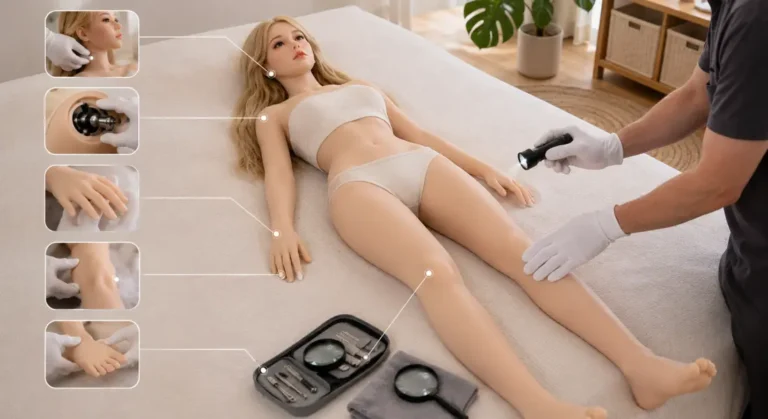
Regular cleaning helps maintain hygiene, preserve surface condition, and reduce the accumulation of dust, body oils, and other residues that may collect during routine handling or use. It also provides an opportunity to inspect the doll for signs of wear, loose components, or surface changes that may require attention.
Although silicone and TPE dolls share many maintenance principles, each material has different physical characteristics. Silicone generally has a non-porous surface that is easier to clean, while TPE is softer and typically requires additional care to maintain its texture and appearance. Understanding these differences helps owners choose appropriate cleaning methods and avoid practices that may shorten the lifespan of the material.
This guide introduces general cleaning principles that apply to most modern silicone and TPE dolls. Material-specific recommendations are covered in dedicated guides linked throughout this article.
Before You Begin
Prepare the Cleaning Area
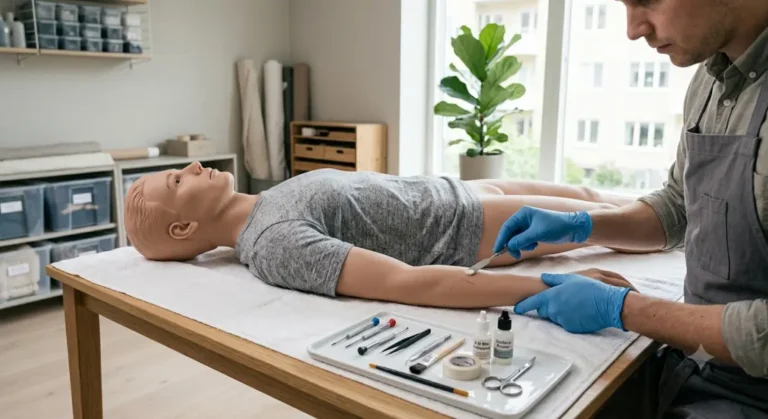
Before cleaning your doll, prepare a clean, well-ventilated workspace with enough room to support the body safely during maintenance. Gather all required supplies in advance so the cleaning process can be completed without unnecessary interruptions.
If the doll contains electronic components, heating systems, or other powered features, make sure they are switched off and disconnected from any power source before cleaning. Follow any manufacturer-specific precautions relating to electrical parts or removable accessories.
Recommended Cleaning Supplies
| Item | Purpose |
|---|---|
| Lukewarm Water | General cleaning |
| Mild Fragrance-Free Soap | Removing surface residues |
| Microfiber Cloth | Wiping and drying |
| Soft Sponge | Cleaning larger surfaces |
| Cotton Swabs | Small areas |
| Lint-Free Towel | Initial drying |
Avoid using bleach, acetone, abrasive cleaners, steel wool, or alcohol-based cleaning products unless the manufacturer specifically recommends them. Strong chemicals may affect certain surface finishes or material properties.
Cleaning Process
Cleaning should be performed methodically rather than all at once. Working one section of the body at a time helps ensure that soap residue is removed completely and allows each area to be inspected during the process.
The following steps describe a general cleaning routine suitable for most modern silicone and TPE dolls. If your doll includes electronic functions or manufacturer-specific maintenance instructions, those recommendations should always take priority.
Step 1 — Remove Accessories
Before cleaning begins, remove wigs, clothing, jewelry, removable inserts, and other accessories where applicable. Cleaning accessories separately helps prevent moisture from becoming trapped against the doll’s surface and allows each component to dry completely.
If makeup, eyelashes, or decorative elements require maintenance, follow the care recommendations provided for those individual accessories rather than applying the same cleaning process used for the body.
Step 2 — Clean the Surface
Using a soft microfiber cloth or sponge dampened with lukewarm water and a mild fragrance-free soap, gently wipe the doll’s surface section by section. Avoid excessive scrubbing or unnecessary pressure, particularly around delicate facial details, fingers, and areas with fine sculpted textures.
Pay additional attention to skin folds, joints, and areas where dust or residue may collect. Rinse away any remaining soap with clean water and ensure no cleaning product remains on the surface before drying.
Step 3 — Clean Internal Openings
Internal openings should be cleaned according to the manufacturer’s maintenance recommendations and the design of the individual doll.
Where applicable, use clean lukewarm water together with a soft cleaning tool intended for narrow spaces. Avoid using excessive force or rigid brushes that may damage internal components or surface materials.
After cleaning, remove excess moisture carefully and allow the internal areas to dry completely before storage or further use.
📌 Related Guide
How to Clean Internal Openings →
Drying the Doll Properly
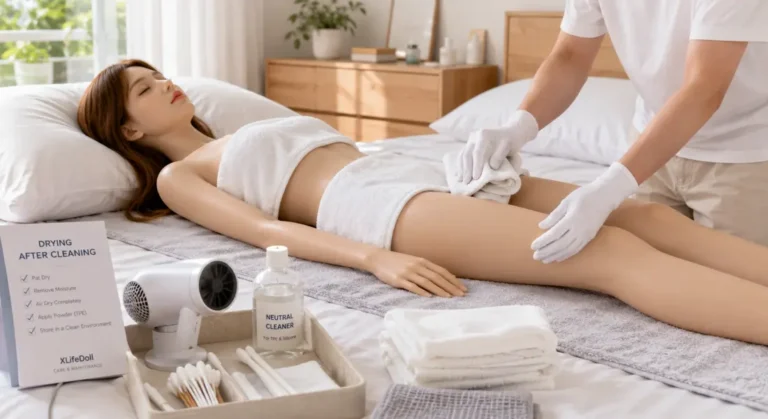
Drying is an essential part of the cleaning process. Residual moisture may contribute to odor development, encourage microbial growth in enclosed areas, or reduce the effectiveness of subsequent maintenance procedures.
Begin by removing visible water with a clean, lint-free microfiber towel. Pat the surface gently rather than rubbing vigorously.
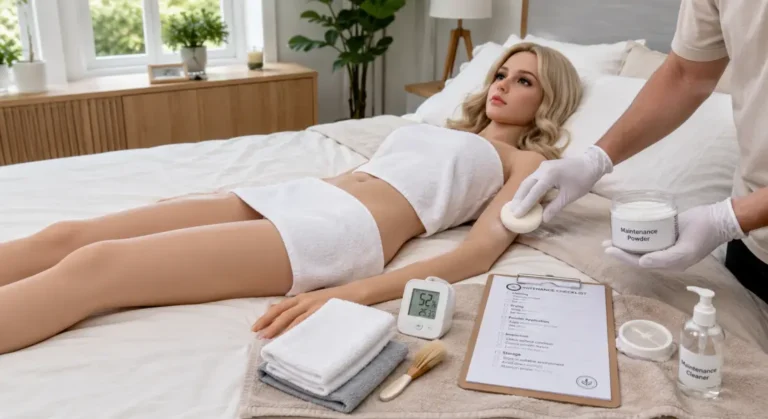
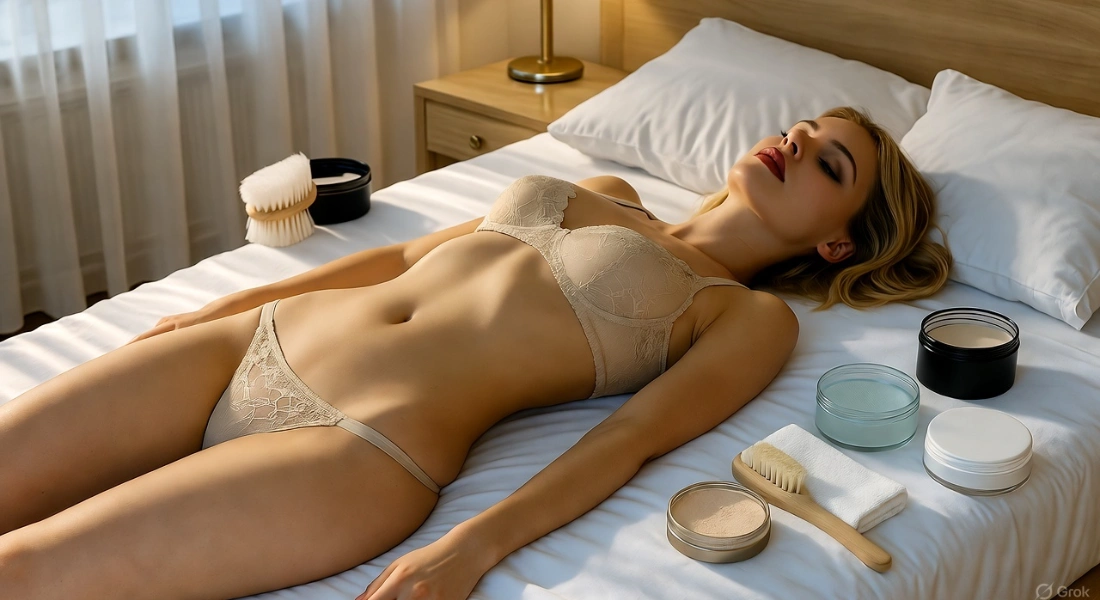
After towel drying, allow the doll to air dry naturally in a clean, well-ventilated environment before dressing, applying maintenance powder (where recommended), or returning the doll to storage.
Avoid exposing the doll to direct sunlight, high-temperature heaters, or hair dryers on high heat unless the manufacturer specifically indicates that these methods are suitable.
💡 Recommended
Allow sufficient drying time before storage.
Complete drying helps reduce moisture retention and supports long-term material preservation. Drying time may vary depending on room temperature, humidity, and the complexity of the doll’s internal structure.
Cleaning Frequency
Cleaning frequency depends on storage conditions, handling frequency, environmental exposure, and manufacturer recommendations.
Rather than following a fixed schedule, owners should clean the doll whenever visible dirt, residue, or moisture is present and perform periodic inspections even during extended storage.
Recommended Cleaning Schedule
| Situation | Recommended Cleaning |
|---|---|
| After routine handling or use | Clean exposed areas and remove visible residue. |
| Before long-term storage | Perform a complete cleaning and ensure the doll is fully dry. |
| During long-term storage | Periodically inspect the doll for dust, moisture, or surface changes. |
| After transportation | Inspect the doll and clean areas affected by packaging materials or handling. |
Common Cleaning Mistakes
⚠️Common-Cleaning-Mistakes
Using Harsh Chemicals
Strong solvents, bleach, acetone, and abrasive cleaning products may affect certain materials or surface finishes. Always use cleaning products that are compatible with the manufacturer’s recommendations.
Using Excessive Heat
High temperatures may affect adhesives, internal components, or material performance. Allow the doll to air dry naturally whenever possible.
Storing the Doll Before It Is Completely Dry
Moisture trapped inside enclosed areas or beneath clothing may increase the likelihood of odor development or other maintenance issues during storage.
Scrubbing the Surface Aggressively
Use gentle wiping motions instead of excessive force, particularly around facial details, fingers, joints, and sculpted textures.
Maintenance Checklist
✅ Routine Cleaning Checklist
Before returning the doll to storage, confirm the following:
- □ All accessories have been cleaned separately.
- □ The body surface has been cleaned with mild soap and lukewarm water.
- □ Soap residue has been completely removed.
- □ Internal openings have been cleaned according to the manufacturer’s instructions.
- □ The doll is completely dry.
- □ Any recommended post-cleaning maintenance has been completed.
- □ The storage environment is clean, dry, and well ventilated.
Frequently Asked Questions
Most manufacturers recommend using a mild, fragrance-free soap together with lukewarm water for routine cleaning. Avoid products containing bleach, strong solvents, or abrasive ingredients unless the manufacturer specifically states that they are compatible with the doll’s material.
Cleaning frequency depends on handling, storage conditions, and manufacturer recommendations. Visible dirt, body oils, or moisture should be removed promptly, and a complete cleaning is recommended before long-term storage.
Alcohol-based cleaning products are generally not recommended unless the manufacturer specifically approves their use. Some materials or surface finishes may be affected by repeated exposure to strong solvents.
Natural air drying is generally the safest method. High temperatures from hair dryers or other heating devices may affect certain materials, adhesives, or internal components.
Yes. Internal areas may require different cleaning tools and drying methods depending on the design of the doll. Always follow the manufacturer’s maintenance recommendations for internal cleaning procedures.
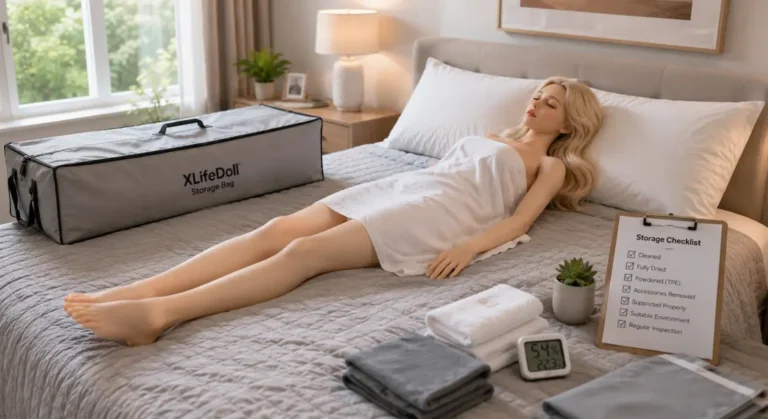
Before storage, make sure the doll has been cleaned thoroughly, all moisture has been removed, and any recommended post-cleaning maintenance has been completed. Store the doll in a clean, dry, and well-ventilated environment.
Related Guides
- How to Dry a Sex Doll Properly After Cleaning?
- How to Inspect a Sex Doll for Damage?
- How to Store a Sex Doll Safely?
- How to Apply Maintenance Powder
Continue Exploring
Related Learning Hub
This article is part of the XLifeDoll Care & Maintenance Center, a structured collection of educational resources covering cleaning, storage, repairs, material care, troubleshooting, and long-term ownership.
Browse the complete Maintenance Hub to explore additional care guides, practical maintenance recommendations, and related learning resources.
Reviewed: July 2026